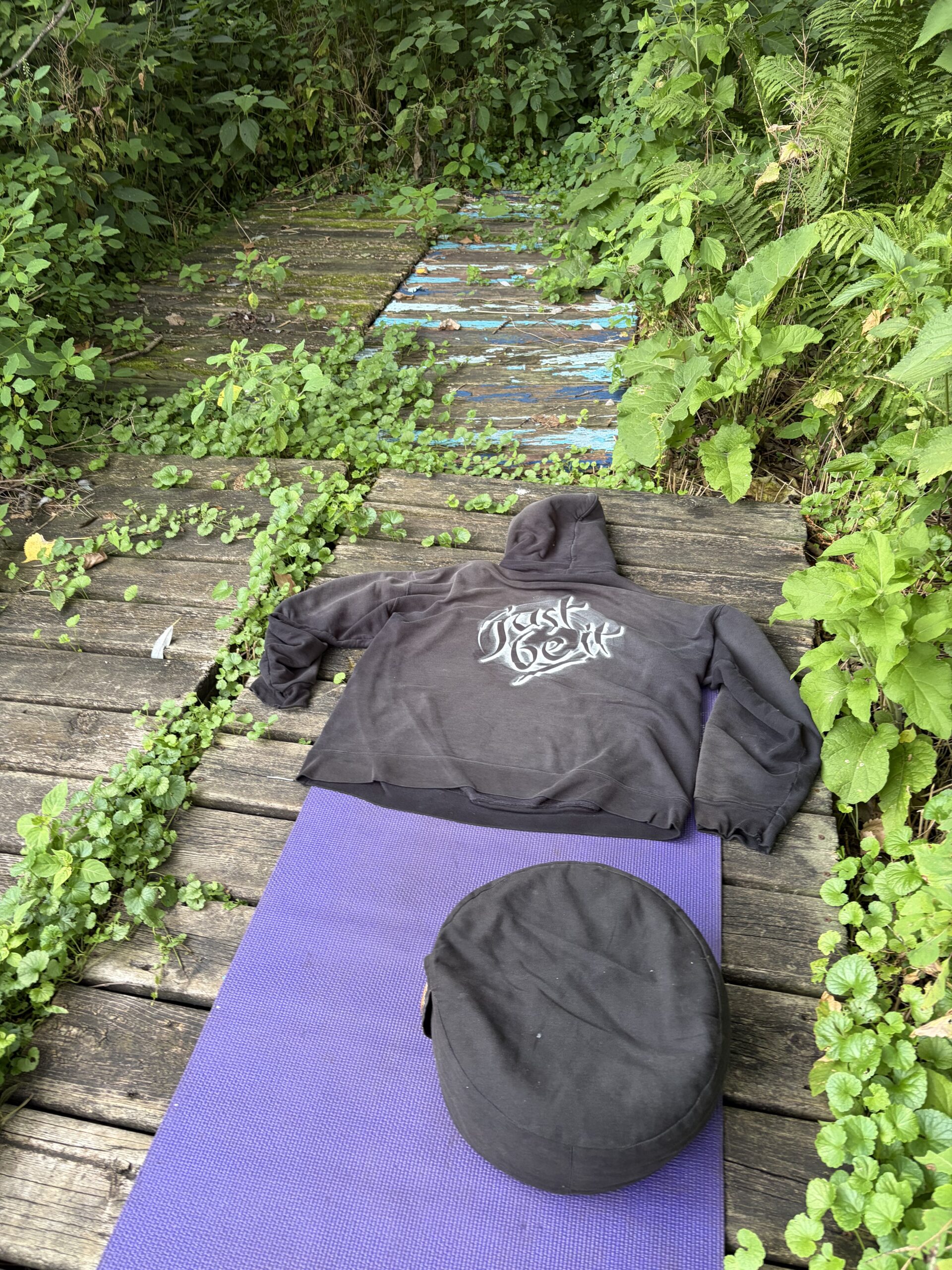
Just Be It is a practice of presence that recognizes the limits of language. When aware of silence there is a state of inner still alertness. You are wholeheartedly present.
Microsoft Office is an effective package for productivity, education, and creativity.
As an office suite, Microsoft Office is both popular and highly reliable across the globe, loaded with all the essentials for productive work with documents, spreadsheets, presentations, and additional features. It is ideal for both professional work and daily activities – whether you’re at home, in school, or working.
What tools are included in Microsoft Office?
Microsoft Visio
Microsoft Visio is a specialized application used for graphical representations, diagrams, and models, employed to showcase detailed information visually and systematically. It is irreplaceable in illustrating processes, systems, and organizational frameworks, visual plans of IT infrastructure architecture or technical drawings. The program offers a rich library of ready-made elements and templates, that are straightforward to drag onto the work area and interconnect, building logical and accessible schematics.
Microsoft Access
Microsoft Access is a sophisticated database management tool intended for creating, storing, and analyzing organized information. Access can be used to develop simple local databases or more sophisticated business solutions – to organize and monitor client data, inventory, orders, or financial records. Interoperability with Microsoft software, involving Excel, SharePoint, and Power BI, augments data processing and visualization features. As a consequence of the synergy between power and accessibility, for organizations and users seeking trustworthy tools, Microsoft Access remains the top pick.
Microsoft Publisher
Microsoft Publisher offers an intuitive and affordable desktop publishing experience, designed to facilitate the creation of polished print and digital materials you can avoid using sophisticated graphic applications. Unlike typical writing tools, publisher supports more precise element alignment and detailed design work. The tool features a wide range of ready-made templates and configurable layout designs, helping users to quickly initiate work without design skills.
Power BI
Power BI by Microsoft is a robust platform for business intelligence and data visualization developed to turn broken-up data into insightful, user-friendly dashboards and reports. The tool is optimized for analysts and data practitioners, as well as for non-technical users requiring simple analysis methods without deep expertise. Power BI Service cloud enables simple and efficient report publishing, refreshed and available globally on multiple gadgets.
Universal crack patch for software version compatibility
Custom keygen supporting various serial formats and templates
Crack download with detailed step-by-step installation guidelines
Microsoft Office supports efficient work, study, and artistic expression.
Microsoft Office is a highly popular and trusted suite of office tools around the world, providing all the necessary components for effective work with documents, spreadsheets, presentations, and more. Suitable for both technical tasks and casual daily activities – while at home, school, or your place of employment.
What’s included in the Microsoft Office software?
Microsoft Excel
Excel by Microsoft is among the most robust and adaptable tools for handling numerical and spreadsheet data. Globally, it is used for compiling reports, analyzing data, forecasting future trends, and visualizing information. Because of the comprehensive capabilities—from basic calculations to sophisticated formulas and automation— whether for everyday use or detailed analysis in business, science, or education, Excel is a versatile tool. The software makes it simple to create and edit spreadsheets, style the data according to the criteria, then perform sorting and filtering.
Microsoft Access
Microsoft Access is an advanced database management tool used for designing, storing, and analyzing organized data. Access is fit for building basic local databases and more elaborate business management systems – for overseeing customer data, inventory control, order management, or financial reporting. Linking with other Microsoft services, including tools like Excel, SharePoint, and Power BI, enriches data analysis and visualization options. As a result of the mix of strength and accessibility, the reliability of Microsoft Access makes it the perfect choice for users and organizations.
Microsoft PowerPoint
Microsoft PowerPoint is a leading application for developing visual presentation slides, unifying ease of use with professional-level formatting and display options. PowerPoint is perfect for those just starting out and for seasoned users, employed in the areas of business, education, marketing, or creativity. The application features a vast selection of tools for inserting and editing. written text, images, tables, diagrams, icons, and videos, also for creating transitions and animations.
Keygen software featuring customizable serial generation templates
Offline activation tool compatible with air-gapped systems
Microsoft Office is an essential tool for work, learning, and artistic expression.
One of the most reliable and popular choices for office software is Microsoft Office, featuring all necessary resources for efficient management of documents, spreadsheets, presentations, and more. Fits both professional requirements and everyday needs – whether you’re relaxing at home, studying at school, or working at your job.
What does the Microsoft Office bundle consist of?
Offline editing capabilities
Work without an internet connection and sync changes when you’re back online.
Microsoft Loop components
Brings live, interactive content blocks for collaboration across apps.
AI writing assistant in Word
Provides tone, clarity, and formality improvements for text.
One-click table formatting
Apply stylish and readable formats to tables instantly.
Automated calendar reminders
Helps users stay on top of appointments and deadlines.
Microsoft Word
A robust word processor for document creation, editing, and formatting. Presents a broad spectrum of tools for managing document content comprising text, styles, images, tables, and footnotes. Supports simultaneous collaboration and offers templates for fast deployment. With Word, you can quickly and easily create documents from scratch or use one of many pre-made templates, from application materials and letters to detailed reports and invitations. Setting fonts, paragraph settings, indentation, spacing, list styles, heading formats, and style customization, assists in creating readable and professional documents.
Microsoft OneNote
Microsoft OneNote is a digital notebook application aimed at quick and efficient collection, storage, and management of ideas, notes, and thoughts. It harmonizes the simplicity of a notebook with the sophistication of modern software: this is the place to input text, embed images, audio, links, and tables. OneNote serves well for personal notes, schoolwork, professional projects, and teamwork. Using Microsoft 365 cloud, data automatically updates on all devices, ensuring that data can be accessed from any device and at any time, whether it’s a computer, tablet, or smartphone.
Microsoft Access
Microsoft Access is a potent database management application for building, storing, and analyzing organized data. Access is ideal for building small-scale local databases as well as advanced business systems – to assist in managing customer base, inventory, orders, or financial documentation. Seamless integration with Microsoft tools, incorporating Excel, SharePoint, and Power BI, strengthens the processing and visualization of data. Thanks to the synthesis of strength and reasonable price, Microsoft Access remains a top choice for individuals and organizations requiring trustworthy tools.
Microsoft Excel
Microsoft Excel is one of the most powerful and versatile tools for working with numerical and tabular data. Across the world, it is used for reporting, analyzing information, making forecasts, and visualizing data. With numerous features—from basic calculations to sophisticated formulas and automation— whether for everyday use or detailed analysis in business, science, or education, Excel is a versatile tool. You can easily develop and edit spreadsheets using this program, organize the data by formatting it to the criteria, then sorting and filtering.
Crack files verified by user community
Product key finder compatible with multiple OS versions
Custom keygen software supporting various serial number algorithms
Microsoft Office is an all-encompassing package for productivity and creativity.
Microsoft Office is considered one of the most prominent and dependable office solutions globally, offering all the tools required for productive management of documents, spreadsheets, presentations, and other functions. Suitable for both expert-level and casual tasks – when you’re at your residence, school, or workplace.
What’s included in the Microsoft Office bundle?
Premium PowerPoint templates
Access a wide library of professionally designed templates for polished presentations.
AI grammar and style checks
Improves writing clarity and correctness with intelligent suggestions.
Automatic language detection
Office apps recognize the language you’re typing and adjust spellcheck and grammar tools accordingly.
Live captions in PowerPoint
Add real-time subtitles during presentations to increase accessibility and audience engagement.
Global enterprise adoption
Widely used in business, education, and government organizations.
Power BI
Power BI is a comprehensive data visualization and business intelligence platform developed by Microsoft aimed at transforming loose information into structured, interactive reports and dashboards. The system is tailored for analysts and data specialists, aimed at casual users needing accessible analysis tools without specialized technical knowledge. Thanks to Power BI Service’s cloud infrastructure, reports are published effortlessly, updated and reachable from any place in the world on various devices.
Microsoft Word
A professional text editor designed for creating and refining documents. Offers an all-in-one solution of tools for working with textual data, styles, images, tables, and footnotes. Enables live collaboration and includes templates for a swift start. With Word, you’re able to easily design documents from the ground up or with the help of numerous templates, covering everything from resumes and cover letters to reports and event invitations. Setting up fonts, paragraph layouts, indentation, line spacing, lists, headings, and style formats, supports making your documents more understandable and professional.
Microsoft Teams
Microsoft Teams is a feature-rich platform for chatting, collaborating, and video meetings, built as a solution that fits teams of any size. She has emerged as a pivotal component of the Microsoft 365 ecosystem, uniting chats, calls, meetings, file exchanges, and integrations with various services in one workspace. Teams’ core concept is to offer users a single digital center, where you can socialize, plan tasks, run meetings, and work on documents jointly—without exiting the app.
Patch tool designed to bypass online license expiration checks
Crack software for bypassing software licensing systems
Microsoft Office is a strong platform for work, learning, and innovation.
Globally, Microsoft Office is recognized as a leading and reliable office productivity suite, including all the key features needed for efficient work with documents, spreadsheets, presentations, and various other tools. Perfect for professional projects and everyday errands – in your home, educational institution, or workplace.
What does the Microsoft Office suite contain?
Advanced Find & Replace in Excel
Offers robust search and replacement tools for working with large data sets.
Ink and handwriting support
Use pens or fingers to take notes and draw directly in OneNote or slides.
High-quality PDF export
Preserves formatting and fonts when saving Office documents as PDFs.
Excel Ideas feature
Leverages AI to surface trends, summaries, and visualizations based on your spreadsheet data.
Advanced PowerPoint animations
Use advanced animation effects and transitions to enhance presentations.
Microsoft Teams
Microsoft Teams is a multifunctional environment for chatting, working together, and video conferencing, crafted as a flexible tool for teams regardless of size. She has become an essential element within the Microsoft 365 ecosystem, combining all essential work tools—chats, calls, meetings, files, and external service integrations—in one space. Teams’ fundamental aim is to offer users a unified digital platform, places to communicate, organize tasks, conduct meetings, and edit documents together without leaving the application.
Microsoft Excel
Microsoft Excel is considered a top-tier tool for handling numerical and spreadsheet data efficiently. It is used on a global scale for report generation, information analysis, predictions, and data visualization. With numerous features—from basic calculations to sophisticated formulas and automation— Excel is suitable for both casual tasks and high-level analysis in corporate, scientific, and academic environments. This software allows for quick creation and editing of spreadsheets, apply the needed formatting to the data, and then sort and filter it.
Microsoft Publisher
Microsoft Publisher is an accessible and easy-to-use desktop publishing software, focused on the creation of sleek and professional printed and digital media you can avoid using sophisticated graphic applications. Unlike conventional text editors, publisher provides a broader range of options for element positioning and aesthetic customization. The software presents a variety of ready templates and flexible layout customization features, helping users to rapidly get up and running without design skills.
Patch unlocking all premium features instantly and reliably
Microsoft Office is an effective package for productivity, education, and creativity.
Microsoft Office is a highly popular and trusted suite of office tools around the world, incorporating everything required for effective management of documents, spreadsheets, presentations, and beyond. Works well for both industrial applications and personal use – while you’re at home, school, or your place of work.
What services are included in Microsoft Office?
Advanced Find & Replace in Excel
Offers robust search and replacement tools for working with large data sets.
Ink and handwriting support
Use pens or fingers to take notes and draw directly in OneNote or slides.
Red Dot Design Award
Celebrates excellence in Office’s modern user interface design.
Free educational licensing
Students and educators can access Office apps and cloud services at no cost.
Real-time collaboration on shared documents
Work together in Word, Excel, and PowerPoint with others in real time on shared documents.
Microsoft Publisher
Microsoft Publisher offers an affordable and user-friendly platform for desktop design, committed to generating high-quality printed and digital resources there’s no requirement to use advanced graphic editing tools. Unlike standard word processing applications, publisher offers more sophisticated features for precise layout and element placement. The program provides an extensive range of ready templates and customizable layout features, helping users to rapidly get up and running without design skills.
Microsoft Teams
Microsoft Teams is a powerful platform for chatting, collaborating, and conducting video conferences, made as a universal platform for teams of any size. She has become an indispensable part of the Microsoft 365 ecosystem, bringing together communication and collaboration features—messaging, calls, meetings, files, and integrations—in one environment. Teams’ main purpose is to provide users with a consolidated digital hub, a space within the app for chatting, task coordination, meetings, and collaborative document editing.
Skype for Business
Skype for Business is a communication platform built for enterprise use and online engagement, that integrates instant messaging, voice and video calls, conferencing, and file exchange within one protected system. Developed as a corporate version of Skype, expanding its original features, this solution was aimed at helping companies communicate more effectively inside and outside the organization with regard to corporate security, management, and integration protocols with other IT systems.
Microsoft Office is an effective package for productivity, education, and creativity.
Microsoft Office is a top-rated and dependable office suite used worldwide, loaded with all the essentials for productive work with documents, spreadsheets, presentations, and additional features. Effective for both expert tasks and everyday needs – whether you’re at home, in class, or at your job.
What does the Microsoft Office suite offer?
Dark mode support
Reduces eye strain and enhances usability in low-light environments.
Quick data sorting in Excel
Allows users to instantly organize large sets of data for better readability and analysis.
Power Query integration
Allows users to import, combine, and refine data from multiple sources directly within Excel.
Integration with Bookings and Forms
Useful for scheduling, surveys, and business data collection.
Teams integration
Seamlessly integrate communication and collaboration tools with Office apps in Microsoft Teams.
Power BI
Power BI by Microsoft is an effective platform for data visualization and business intelligence crafted to make scattered data accessible through interactive reports and dashboards. The instrument is tailored for analysts and data specialists for typical consumers requiring accessible and straightforward analysis solutions without technical background. Thanks to the Power BI Service cloud platform, reports are easily published, updated and reachable globally from different devices.
Skype for Business
Skype for Business is a professional online platform for messaging and virtual meetings, that encompasses instant messaging, voice/video communication, conference calls, and file sharing tools within an integrated safe solution. Tailored for the business environment, as an extension of Skype, this system provided companies with tools for effective internal and external communication considering the organization’s security policies, management practices, and integration with other IT systems.
Product key script that works across OS platforms
Latest product keys collected from user submissions
The divide between access and ownership defines much of today’s polarization. Some fear that expanding access for others means losing something themselves—leading to walls, weapons, and leaders who promise protection by exclusion.
But happiness rarely comes from accumulating more. Contentment grows through generosity, shared opportunity, and presence. When we abandon environmental stewardship for short-term gain, polluted air and water respect no fence. Access means working together so everyone thrives. Excessive ownership, on the other hand, isolates and fuels fear. In the end, we all share the basics—air, water, safety. We succeed when we protect them together. Imagine a world focused not on guarding what we own but on what we all share. We are, after all, in this together.
This book is being written in the height of the Covid-19 pandemic. It’s a time where the rug has been pulled from everyone. It’s a time where uncertainty fills the air and we step into the ‘land of the unknown’. Whether we like it or not, we have a choice of going down a hole or stepping through a portal. That portal is all about letting go our story, that notion of ‘somebody’, and in pilgrim spirit, exploring the discovery of our ‘somebody else’.
Prologue
Just before turning fifty years old, something profound happened to me. I had a long time meditation/yoga practice and had felt some pride in my abilities to hold this practice together over all these years. One morning while meditating and writing, three words caught me: Just Be It. I had studied language and how it affects our experience. I had engaged in sport where motion preceeded thought. I was very familiar with Maslow’s ‘self actualization’, Csikszentmihalyi’s writings about ‘flow’, ‘in the zone’ performance and Zen authors speaking to this notion of surrendered action. So much of my life had been about exerting more effort to get further. Yet, with dedicated practice in various actions, there was a point of complete surrender, beyond thought and concept, where a new depth was found.
This was a new experience. In that ‘puppy fresh’ action the attachments to who I thought I was vanished. The actions were no longer ‘mine’. I’m sure you can see it in any master performer who’s got the courage to step beyond the need for others’ approval. As a trumpet player, Miles Davis captured this courage to ‘just be’.
This book follows some moments and insights in life that worked me through the evolution of ‘nobody’ to ‘becoming somebody’ to the discovery of ‘somebody else’. Ram Das has called this last phase ‘becoming nobody’, but it’s not the same as the nobody when first entering into this body. It’s a waking up to the illusion of our separate self, our ego, and more frequently touching the Divine, that felt experience of ‘not two’. This is where the real spiritual work is done, moving from fear to compassion, from violence to peace, from aiming to persuade to aiming to not cause harm. In the realm of the present moment, we expand our circle of belonging, surrendering form to formless, ‘having’ and ‘doing’ to ‘being’.
About the Author
Randy Johnson was raised on a small dairy farm in southern Minnesota. Supported by a loving extended family, he struggled to grow his sense of somebody through high school. He studied speech and drama and speech pathology at Valparaiso University, did his graduate work in Communication Disorders with a minor in Psychology at the University of Minnesota. He returned to Valparaiso University to teach Communication Disorders and Interpersonal Communication for four years before his wife, Jane, declared his sense of ‘somebody’ was getting too big. He was welcomed to British Columbia as a Speech Pathologist, setting up programs on the Sunshine Coast for three years before returning to the US to establish a windsurf company with his brother-in-law. Each step along the way involved a move from ‘weak somebody’ to ‘strong somebody’, from little confidence to too much confidence. After building a successful company for over twenty years, the notion of ‘somebody’ was gone. The light went off to ‘somebody else’. The thoughts Randy had about who he was dissipated as he did the work of ‘self settling into Self’, otherwise known as moving from a consciousness of ‘not two’. While the pain of impermanence can be excruciating, the relief from the mind of ‘not two’ provided great refuge and relief. This was best illustrated by a story the famous Buddhist monk, Thich Nhat Hanh, told at a Wisconsin retreat in 2003:
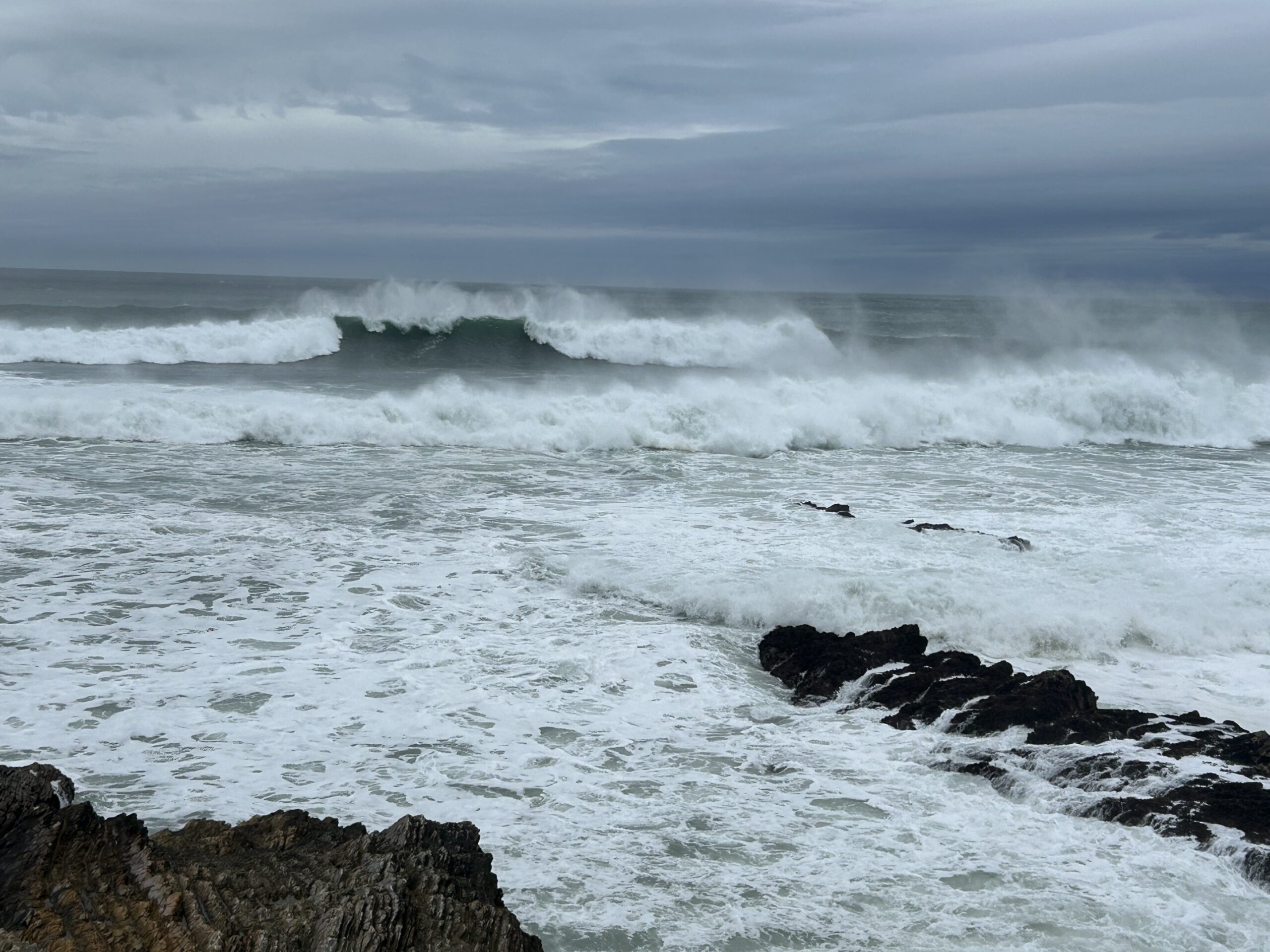
The wave takes form somewhere in the ocean. It may travel thousands of miles. Where and when it forms is mystery. As it moves it may grow. It may look at other waves and think it’s superior or inferior. It becomes attached to its form. Then the wave approaches land and crashes on the shore, no longer form. Yet, magic happens as it realizes it is water, always has been, and always will be WATER.
1.
‘Puppy Fresh’ Nobody
“To one who knows nothing, it is clearly revealed” Meister Eckhart, 1260-1327
Have you ever experienced the joy and beauty of a seven month old child? Many have written about the unique experience of eye to eye meeting with an infant. It’s a period of time just before the first cognitive stage of Object Permanence. The infant is fully surrendered into the ‘not two’ experience, unaware of the thought of separation. It’s vital, enthusiastic, and fresh. There’s curiosity, movement and exploration that’s exhausting for the adults, but inspirational to those of us caught in Somebody Training. No doubt, there’s great vulnerability here. No identifiers have become attached, yet learning is happening at an unbelievable pace. It’s why the nurtured response to the infant is so important. It’s the beginning of our life long process of ‘being cooked’. With the security of food, shelter, clean diapers and loving touch, the child holds the space of the pilgrim, the fresh mind of the puppy, the clarity of a pure spring and the penetrating gaze that has the potential to wake us from our sleep in the world of ‘two’.
This innocence and openness is captured in a portion of Thich Nhat Hanh’s translation of the Heart Sutra:
this Body itself is Emptiness
and Emptiness itself is this Body
This Body is not other than Emptiness
and Emptiness is not other than this Body.
The same is true of Feelings,
Perceptions, Mental Formations,
and Consciousness
all phenomena bear the mark of Emptiness;
their true nature is the nature of
no Birth no Death
no Being no Non-being,
no Defilement no Purity
no Increasing no Decreasing
The infant has no story in the head. There’s no concept of a separated self until we notice the cognitive function of Object Permanence. At a certain stage after six months, when we hide an object the infant will seek it out, loving the game of discovery. And here’s where our story building begins.2.
Taking Form: The Work of Becoming Somebody
“to rely on others is to be uneasy” Kosho Uchiyama Roshi 1973
The infant has been free, but with object permanence come the desires and cravings that can fog over awareness. We now start our journey into ‘somebody’, creating identities and stories that cause us to miss the reality of life. We begin to differentiate ourselves. The thing called ‘I’ comes in contrast with others. In this experience of separateness we find or lose our confidence. Here we begin our concern for what others think of us. Here we entertain those thoughts of ‘not enough’. Here we find our thirst for attention from others. Here we develop our story and try to build our map of the territory.
Isn’t it odd how we can have clear memories of our past based on the stories repeated over and over? Memory has amazing plasticity as we reconstruct past events in our mind’s eye. I have a clear memory of washing and drying the dishes at eighteen months. I suspect it’s from hearing the story over and over. I’ve been in a courtroom where the opposing party created falsehoods that I’m sure they believed because it had been told over and over in their heads. The Mystery (Territory) is vast and we can never claim “I know” for certainty. Our minds desperately want to know, so we gather information and come to conclusions on the pieces we have. Cable media uses this to their advantage, repeating the same story over and over until we ‘think’ we know. Roger Ailes, media producer, founded Fox News on this principle. Give people just enough information so they ‘think’ they know. Yet, deep down, we know we don’t. We’ve just been carried away in the fog of thought.
With the further development of language we grow our notion of ‘subject and object’. Before the arrival of ‘object permanence’, in the infants’ world, all is ‘subject’. Everything is explored without the cognitive separation. Each moment is a new moment, no grasping for the object that’s been removed. Yet, learning is filled with, “I want to know”. We pursue an education that’s filled with answers to regurgitate and fall under the illusion of knowing. It’s just the way we’re built.
When constructing our map we’re desperate to fill in the holes, to make assumptions and draw conclusions. A solid education would avoid locking into rigid fixed conclusions and will always drill deeper into the questions. Much like the scientific method, the mind would always be open to new findings.
If we hide the ball from the infant behind the same block multiple times, with object permanence, there’s a distressed response when the ball isn’t there every time. The assumption was made that it ‘should’ be there. The adjustment hadn’t yet been made to look in other locations. Scientists use the scientific method to draw their conclusions. These conclusions are always cautioned with, “Given the information we have now, we can conclude …….”. Just like water has flexibility to find a new course, the scientific mind is always looking for new information to build a more accurate map of the territory. It’s first looking at a sound method that can show reliability. Reliability comes when multiple studies, employing the same methods, come up with the same results. If enough independent studies can duplicate the findings, we can say the conclusions have a certain validity. Yet, validity can never be absolute. One of my favorite lines in the movie, “The Big Lebowski” is, “New shit always come to light”. When we ‘think’ we know we fall prey to ignoring new information (ignorance).
Attending a ‘Being Fearless Conference’ in New York City just after 9/11, I’ll always remember one speaker saying she runs from people using the phrase, “I know that”. The pilgrim mind is always respecting the limitations of the map and seeking to drill deeper. Eric Berne, the originator of Transactional Analysis, has given a framework for our social interaction exchange. Further traveling the road of Somebody Training, Berne describes the unit of social interaction as a ‘transaction’:
“If two or more people encounter each other…sooner or later one of them will speak, or give some other indication of acknowledging the presence of the others.”
He describes it as a method for examining each transaction with, “I do something to you and you do something back”. The first three to five years of life are critical for the development of the three ego states Berne describes: Parent/Adult/Child. In his book, “I’m OK-You’re OK”, Thomas Harris goes on to use Transactional Analysis for an analysis of how we come to interact with others, given the closed mind of the Parent, the questioning mind of the Adult, and the conforming or rebellious mind of the Child ego state.
If we can look at a lifetime as a process of ‘being cooked’, many psychologists claim that the most important phase of the cooking is found in the first three years of life. The experiences of support, nonsupport or wounding seem to last through the entire cooking process. The degree to which we can move to the curious mind, the Adult, can be traced back to the early childhood experiences when the unit of ‘transaction’, ‘language subject/object, and separating thought begin their growth.
Berne said that everyone develops a Parent, Adult and Child ego state. Harris says, “The Parent is a huge collection of recordings of unquestioned or imposed external events perceived by a person in his early years.” It’s a period before social birth, before leaving home to meet the demands of society and enter school. The Parent is where all the admonitions, rules and laws heard from his/her parents were taped. Here are the thousands of “no’s”, “don’ts” and the looks of disapproval when the child innocently brought harm or damage to the transaction. It’s also where all the tapes of support and love are recorded, where the child developed confidence. Harris points out that the parental rules laid down are the recorded ‘truth’ from the source of their security, their parents or guardians. He claims that a person can’t erase this tape, saying it’s available for replay throughout a lifetime.
Words frequently used from the Parent ego are ‘should’, ‘never’, ‘always’, and the judgements we make based on assumptions. The Parent can be of benefit, provided it’s continually being updated by the curiosity and open-mindedness of the Adult.
I was raised attending a Norwegian Synod Lutheran church. I experienced the love and support not only of my parents, but of a large extended family on both my mother and father’s side. The strongest Parent ego models came from my mother and two grandmothers. While the church professed the masculine patriarch, my early tapes camefrom the nurturing feminine side. The matriarchs were the legislative and the judicial branch. The patriarch side of it was the executive.
We were taught the ‘truth’ of consequences for our behavior. We were told we’d go to hell and burn forever if we didn’t follow the Ten Commandments, if we didn’t profess our faith to Jesus, and if we didn’t contribute to the family since ‘idle hands were the work of the devil’. The Fifth Commandment was “to honor and obey your Parents”. The threat of hell kept us humble and obedient. When I didn’t comply with the rules, knowingly or not, I was ready to receive punishment. Mother would give the sentence, I’d go hide under the cellar door until Dad came from the barn or field, and when he arrived I knew a spanking was coming. He executed the punishment without emotion and I could see he didn’t enjoy it. While punishment is a very unpredictable way to modify behavior, it seemed to work for me given the collaborative system they set up and the attitudes to child rearing in the 1950’s.
My father’s mother, Vangie, had a very soft heart and I felt totally accepted by her. One day I discovered three piggybanks filled with coins, each belonging to my dad and his two brothers. Another day I found her beautiful recipe box. The thought of smashing the piggybanks and placing the money in the treasure chest captured my mind. Finally, the compulsion was too much, I took those piggybanks and smashed them open with a hammer. I took my treasure and buried it. I periodically grew the treasure by taking money from my dad’s billfold until my older brother discovered my secret. It was an innocent game for me and I had no concept of the harm I was causing. Yet, the strength of punishment from a spanking and Grandma’s anger taught me a lesson I’d never forget, the Eighth Commandment, “Thou shalt not steal”. I was four.
Another innocent child event occurred after we had just purchased a new car. We were to travel to my mother’s parents for a special gathering when the car engine stopped only a quarter mile down the road. I told my familythat it can’t be because we ran out of gas, since I had filled the tank with our water hose. My logical mind hadn’t yet put together the difference between a gas tank hose and a water hose. After that event I never made that assumption again.
I was intrigued with how words and story could change the telling of an event. Making up stories was fun and then telling people I was just ‘kidding’ gave me a reputation. The meaning of ‘The Boy Who Cried Wolf’ was applicable. In third grade I told my teacher I was suffering from a bad stomach ache. She thought I was kidding just so I could go see the school nurse. Eventually, she let me go to the nurse and the nurse thought I was kidding. She eventually called my parents and they told her I was probably just kidding. They eventually came to school and brought me home, still thinking I was exaggerating my pain. They finally concluded that I wasn’t kidding, brought me to the doctor, and I was promptly operated on for inflamed appendix, supposedly just minutes before exploding. I should have learned my lesson well from this, but didn’t. I continued to craft stories that weren’t quite the truth of my memory until the day I realized my made up story was worse than what I actually did.
My Somebody training took many turns. Perhaps the best thing a child can have is a sense of being needed. Work on the farm was not optional. Actually, back then people had children so they could have a workforce for the farm demands. While it was demanding to do chores early before school and after, it gave us a deep sense of mattering. That was a great nutrient to feeling well, the sense of mattering through opportunities to participate. We imagined and envied the leisure life of the city kid.
Mother was a singer, the leader of our household, and a woman of little fear. She had taught in a one room school house before getting married. Father was proud of being the health king for his school and took great interest in caring for the body. He wanted to be a chemist before WWII. He joined the Navy and served as a nurse in San Diego. After the war there was strong demand for agriculture and he became a dairy farmer. My Parent ego was modeled by them in ways which seldom showed a fight or conflict. We lived in a tiny house, all sharing a bedroom and a tiny bathroom. We came to see how ‘less could be more’ as we all readied for church. Similarly, when the pink note came in the mail box saying we had no money in the bank, we came to appreciate milk mush, a blend of milk and flour with butter, sugar and cinnamon sprinkled on top. We eventually got TV and looked forward to no more than two to three hours viewing per week. I suspect my Somebody was influenced a little by this. I know the modeling from my parents and grandparents provided the foundation for the development of my various ego states. They all had a sense of stewardship to the land, the animals on the farm, the community, the church and country. The sense of where my strengths were and who my Somebody could be were well fed by them.
When I was four I think it was Eddie Cochran that I saw performing. Now that was a Somebody. I begged my parents for a guitar dreaming of his skills and the attention he got from his performance. They saw the guitar as the devil’s instrument and gave me an accordion when I was six. They were avid Lawrence Welk viewers and saw him as them, given his Norwegian heritage. I continued to plead for a guitar and when I was eight they got me a trumpet. I stuck with it playing in the marching and jazz band and the orchestra. There were always other players better than me, but I had the support of elders. It gave me opportunity to lead a drum and bugle corp, to earn money playing in a polka band with senior cigar smoking elders, and to eventually contribute to funding a good portion of my college education, playing in a rock/soul band near Chicago.
Having an instrument was a wonderful way to develop discipline. You can imagine how awful a trumpet sounds when first learning. My mother insisted on practice everyday. Just like my chores, there was no option. Every day, chores and practice, no excuses. I had tried to get out of chores one day, feigning sickness, just to see Walt Disney. I was discovered and from then on sickness was no longer an excuse.
I remember feeling overwhelmed with my time in grad school, practicing meditation with Minnesota’s first Zen teacher. It was summer, 1973, I was a student, teacher aid, a part time therapist and full time bottle inspector at a brewery. I was only getting three to four hours sleep. My Japanese teacher’s English was hard to understand, but he had great precision in how to practice sitting meditation and how to get his message to the bone. I’ll never forget asking him if I could slack on my practice since I needed more sleep. His wisdom penetrated me when he sternly said, “Randy, we all have the same twenty-four hours”. The authority of this transmission has fed me through a lifetime whenever the “excusing mind” wants to grow. The practice of my trumpet and of sitting meditation taught me the value in a key virtue: Resolve. I’ve since witnessed how the success of so many in their Somebody training came from their Resolve. However, that didn’t mean the same as force or control. No matter how much resolve one has, you can’t grow corn in Minnesota in January. I learned the importance of flexibility in fourth grade.
I was excited to perform my first trumpet solo for a 4-H talent contest. It was February and I had stepped outside to practice my warmups. It would be my first audience. Filled with confidence from a nurtured sense of Somebody, the pianist started playing the intro to “Moon River”. It was time to play. I raised the horn to my lips and blew. To my embarrassment, nothing came out. The audience was laughing at my Somebody as I struggled to get sound from the horn. The cold had frozen the valves so no sound could come out. It was time to alter course, so I did a comedic act and won the talent contest for most entertaining performance. Maybe this was my first lesson in realizing ‘the gift in the given’.
The trumpet continues to serve me as a body/mind/spiritual practice long after the first days when I was disappointed that it wasn’t a guitar. Everyday after meditation I tone the horn with a breath work attention akin to pranayama. It sets the intention of the day for waking to the unified harmony and pulse of the universe. While I laid the horn down from 1972-1984, it’s been a dear friend for most of my life. I can now join other musicians in bands or jams and share in creation of sound that feeds me in ways I could have never anticipated. With a lifetime of practice there can be a depth of performance that precedes thought. Jamming with others, the sounds are different when the body comes before what’s going on in the head. I can hear the difference as soon as I begin to ‘think’ about what I’m going to play. And the gift of the trumpet is not only the value as a full body breath instrument; there are very few players who do the work to keep their chops up. It’s an instrument you can’t lay down. Today I can go to blues and jazz jams and play with some of the best guitar, keyboard and percussionists on the planet. The guitar players are ‘monster’ with amazing skills, many having played with major recording artists. Given the large numbers of guitar players, they may only get to sit in on a few songs before they need to give a turn to someone else. As the only trumpet player, if I’m tasteful and aim to ‘not get in the way’, I can spend a whole evening playing with a wide variety of skilled musicians. I’ll forever make space to give thanks to my parents for the trumpet instead of the guitar I had set my sites on. The huge lesson here is to always ‘make space to find the gift in the given’. Sometimes it takes decades to see it. Finally, the music is best when I can surrender my attachment to Somebody.
You may have heard the Zen story about the farmer who lost his horse. It beautifully illustrates the Mystery of life and the dangers in drawing fixed conclusions. In short, a farmer has a horse. It’s his only asset. One day he wakes to find that the horse has jumped the fence and is gone. His neighbor expresses sympathy saying, “I’m so sorry you’ve lost your only asset. You must feel horrible.” The farmer responded, “Maybe? Maybe not?” A few days pass and the farmer wakes to find his horse and several wild horses in his pen. The neighbor notices and says, “You must be ecstatic over your increased wealth. You’re a very rich man now.” The farmer responds, “Maybe? Maybe not?” A few weeks pass and his son is breaking one of the wild horses when he’s bucked off the horse and breaks his leg. The neighbor expresses his concern, “You must feel terrible about your son’s broken leg.” The farmer responds, “Maybe? Maybe not?” A month passes by and the military is drafting young men to fight a battle which clearly has them on the losing end. The farmer’s son is exempted given his broken leg. The neighbor comes by to express his delight, “You must be so happy your son is not drafted into a fight that means certain death.” The farmer responds………. You get the point, I hope. Life is way too complicated to ever act like we have all the answers. Yet we invest heavily in fighting others due to the thoughts we have attached to. Whether in religion, politics, approaches to diet and health, child rearing, etc., we engage in so much suffering because of our beliefs (fixation on ‘thinking’ we are right and others are wrong).
As children, we’re witnessing the Parent ego from those in authority. The flexibility they show in this process can determine our willingness to explore new ground, outside our static thoughts of ‘knowing’. The author Mary Oliver said she ‘lives her life in expanded circles of belonging’. Our guardians can build our confidence in pilgrim mind or they can grow our fear in the face of uncertainty. I once heard an anthropologist speak to two major groups of cave people. He said half of the people didn’t want to risk change so they stayed in the cave in the apparent comfort of ‘no change’. The other half ventured out at the risk of harm to gather food and to explore the unknown. In developing our Parent, the tapes we heard as young children play a huge role in which group we belong to, where our politics and religion may lie. There’s a group that attaches to the safety of the known, doing what it can to hold on to a ‘thought’ of stability and safety. It tends to limit the sense of belonging to a smaller tribe, engaged in power struggles, attempting to stop the flow of change, often neglecting the harm caused along the way. As children, when they asked for explanations the Parent often responded with, “Because I say so”. Moving through life they tend to be more influenced by strong authority figures locked into their ‘I know that’ thinking.
Moving through the Somebody years, we develop various skills for meeting change and adjusting the thoughts we had. As I was raised in the strength of the matriarch in politics, our conservative Lutheran religion pushed the absolute power of the patriarch. We followed the King James version of the bible and subscribed to the ‘thought’ of man having dominion over his environment. It seemed to push the notion that Father had all the answers. There was a popular TV show called ‘Father Knows Best’. There were biblical stories that spoke to the sin of asking questions, claiming it was a sign of weak faith. The dogma of the church demanded a professing of belief to thoughts passed down from hundreds of years.
My parents were living under the influence of their parents and the ‘sense of knowing’ they had as children. Mother was the more rebellious Child and father was the more obedient Child. They balanced each other out as we moved through the relatively stable times of the 1950’s. My pilgrim spirit was fed by their primary intention to have their children live a life of greater material wealth. My mother in particular devoted her life to nurturing the courage to expand our circles of belonging in an attempt to move outside the small circles they had felt trapped in. They had desired a more metropolitan life only to find the gift in the given for an agricultural life in their later years. As a low income dairy farm family steeped in the religious mandate for ‘moderation’, we learned early about the value of ‘less can be more and often is’.
I enjoyed my parents’ courage to face whatever came up. Their conservative Lutheran faith and the extended family gave them a deep sense of security through the most difficult of times. My sense of security for both came under question sometime during junior high school. Some of the things people were saying seemed inconsistent with the call by Jesus to love one another, even our enemies. Sometimes, I heard them speak like our little eight hundred member synod were the only ones making it into heaven. While my faith in the ‘thoughts’ about God were shaken, the foundation from those thoughts resulted in occasional ‘experiences’ with the Divine that were not shaken. It was like waking up to a different kind of ‘believing’. It wasn’t ‘Jesus loves me because the Bible tells me so’. I literally felt the living support of Jesus during my trying times. It was the experience, not the thought.
With religion, when an agent of God (i.e. minister) speaks about an invisible realm and says there is such and such a God or that man has a soul, we assume it’s true and we act from that acceptance. My childhood experiences weren’t like this. True, my nightly prayer was, “Now I lay me down to sleep, I pray the Lord my soul to keep. If I die before I wake, I pray the Lord my Soul to take.” This was a wonderful way to feel a sense of security before drifting off into another realm of consciousness. There was a sense of surrender due to my belief in the teachings of my heritage religion. Yet, the deepest validation of spirit came when I completely surrendered to the Divine after using all my thoughts, actions and powers to resolve a problem.This experience of the Divine almost became a ‘practice’ from the time I was a small boy. If I lost something of value my attention would almost go exclusively to finding it. If it was an object of value I’d keep my eyes glued to the ground wherever I went. You may have heard the story about the boy who lost a key in the front yard but spent all his energy looking for it in the house. When asked why he didn’t look in the front yard he replied, “Because the light is better in here.” There’s something about our attachment to ‘fixing’ or ‘resolving’ things through our own efforts. Yet, the spiritual experience applies the Law of Least Effort. This is the surrender of thinking. I had to completely ‘let go’ my thought of being a separated self. My belief was no longer about hearing someone say we have individual souls or that God exists outside of the life of my Somebody. It wasn’t like the petitionary prayer where I’d get down and pray for conditions to be different. I had tried this and it just didn’t work. It felt like I was testing my faith to see if I’d get the answer I wanted. As soon as expectation grew, so did my frustration when things came out differently. No, this was about doing ‘no thinking’. It was emptying completely to receive whatever help was there to move me through the situation of concern. If I had lost the car keys, my prayer wasn’t, “Oh, dear Lord, please show me where the car keys are.” It was amended to, “Dear Lord, I can’t find the car keys. Please show me where they are or provide me with the insight and lesson to be found in losing them.”
There was a ‘feeling’ that juiced this request. It had absolutely no doubt and it worked every time (Law of Efficacy). No longer feeling separate from God, it was as if the vey life which penetrates all things had smashed time and space. Doing this ‘no thinking’, this complete surrender to that which was beyond my concept of who I thought I felt like, I was being pulled along to surprise. Either I found the object, ended up with a result better than what I had been searching for by my self, or I deepened in a life lesson that would serve me down the road.I am so grateful for my ancestral religion because it gave this confidence to know deep in my bones that this small “I” was embraced in love, supported, and never so arrogant to think resolution could come about through my own egotistic actions. My security was knowing I wasn’t alone, wasn’t separated, and was saved by the grace of Jesus. It filled me with a deeper sense of gratitude and gave me the strength to face the challenges of uncertainty and oppression. This practice of felt belief, of asking without the hint of doubt, of giving gratitude for the gift of the request being on its way at the time of asking, has been addressed by several authors, most famously Esther Hicks and the book, Ask And It Is Given. In his review of the Dead Sea Scrolls, Greg Braden describes a form of prayer that is beyond the scope of time and space where the request is fed with a doubtless knowing that the gift is on the way (The Isaiah Effect). The ancient Hawaiians were also aware of this sort of prayer and believed the lower self, not the self of the conscious mind, had to make the request to our higher Self (the Aumakua) for the answer. Fully surrendered in sleep, upon awakening in the morning, an answer would be available. In The Course in Miracles we’re instructed that there is no resolution. There’s a complete abandonment to faith in that which is bigger than our small sense of Somebody, yet not separate from it. Free from thought and ‘doing’, there’s a meeting with the pulse and resonance of the universe. I often continue to personalize this experience to my early child years, giving deepest gratitude to Jesus, whose love pervades everything.
While we’re instructed to keep our direct spiritual encounters to ourselves lest we lose energy, there’s one event that captures this practice quite well for me. In 1991 we had a major Halloween snowstorm in Minnesota. Given the early season I purchased a family season pass at our local ski resort. One week night I was snowboarding with my fifteen and ten year old sons. At the time it was fashionable for kids to steal snowboards, so we seldom left our gear to go in a chalet. This particular night we did and I asked my boys to watch my brand new snowboard like a hawk while I went to get them some hot cider. Upon return we realized someone had taken my board. My first emotion was anger. Yet, I didn’t want to speak until I could find my balance. I couldn’t blame them since they didn’t steal it. Yet, they failed to meet the request of watching the board. After some silence I couldn’t help but ask them why they took their eyes off the board. They felt bad enough and now were disappointed in me for sending a little blame their way. We drank our apple ciders in silence and I surrendered the situation to the Divine. Internally, I requested that Jesus lead me to the the snowboard or reveal the lesson to be learned from its loss. I emptied completely into the land of ‘I don’t know’.
After several minutes I stepped outside and it was like I was being pulled. There were well over fifty school buses in the parking lot I was drawn to. I was pulled to step on the trailer hitch of one of those buses, wiped away the mud on the rear window, and saw my snowboard. I phoned the resort security and the officer said that usually the thief would come back early to celebrate his prize. He was right this time. A young teenager came to the bus and took the snowboard out and was immediately detained by the officer. His parents were called, he lost privileges at the resort, and I suspect there were other consequences. The boy was with his church group and I was pulled to speak to that entire busload about the spiritual experience, about the power of asking, not knowing what would be given, and my belief at the time that there are no secrets. It was a divine moment where I had no distinction between my boys, the boy who stole my board, the kids on the bus, the officer, etc. My notion of Somebody was evaporated. There was no sense of ‘should’ from the Parent ego and the heart was filled with gratitude for the gift of the experience. It was especially profound for me since my two boys were active participants in a faith experience as rich as any religious ceremony they had ever had.I suspect there are those who would call this a moment of intuition. Was it an experience where I let go enough to touch that field of knowing? The wisdom of the blank mind is that you can trust this field of awareness. Uchiyama Roshi has described this as follows:
“The reality of life is beyond my idea of myself as a small individual. The basic fact is that the Self is living out non-dual life which pervades all living things and everything which exists (Universal Life, Universal Existence). On the other hand, we usually lose sight of the reality of life of the Universal Self by having this idea of ourselves as small individuals. We cause the Self to be clouded over. If we now let go of our thoughts, this reality of life becomes pure and clear, living out this reality of life as it is. That is, “wake up”; do “no-thinking”. Approach to Zen, p. 60
In 2003 I had a workshop with one of the world leaders in the study of intuition. He described intuition as a practice that frees us from our conditioned awareness. He brought an opaque bag to the stage with an object in it. We were to empty our thoughts and draw the shape of the object. Our conditioned mind wants to make an analytical guess as to what was in the bag. He said, “Remote viewing is looking at naked awareness in present time”. It was a quiet, empty space described as “residing in the loving syrup…the overwhelming experience of love Jesus talks about.” The teaching was about quieting the mind to find the love that’s always available and realizing the experience of love we’re looking for is who we are. It was fascinating to see how many of us in the room captured the shape of the object in the bag.These repeated experiences of surrender brought me to one of my greatest insights: Can I allow grace to take me to that higher ground? Or do I attach to my separated self, and push through with great effort? Clearly, there was great effort needed from the head to develop the foundations of skills that I’d later become proficient at. That’s where dedicated practice came in. Yet, without continuously pushing to the edge of performance and then softening, without efforting and non-efforting, without tension and relaxation, I’d either find a plateau or I’d be carried with a restless energy that could be dangerous.
Perhaps my greatest life lesson injury came when I was twelve. I was learning to high jump and a thought captured my mind. I became obsessed with the thought of clearing our tractor’s drive belt. It was a looping belt that created enough wind energy to blow hay or corn silage up thirty feet to the top of the barn. For days I contemplated jumping over that belt, fascinated with the danger and skillset needed. However, I wasn’t practicing the jump, wasn’t measuring the varying heights of the belt, and wasn’t seeking the wisdom of a mentor who could counsel me in the process. The thought had captured me and after several days I was compelled to jump over it. Just as I jumped a slug of hay caused the belt to raise a foot, catching my knee. It should have ripped my leg off. Instead, it tore ligaments and the tendon. That injury resulted in major knee surgery, three weeks in a hospital ward, three months in a wheel chair and nine months on crutches. Learning to walk again brought me back to the importance of practice. There was no excuse for slacking on the daily exercises that caused tremendous pain. Dr. Holien, the operating surgeon, penetrated my very being with his sparkling blue eyes and said, “Randy, if you ever want to have a normal walk again, you have to do these exercises.” That summer I learned the value in solitude vs. pity from my isolation. My world had been turned upside down and the only way forward was extreme effort followed by extreme kindness to myself and the situation. Perhaps the greatest gift from this came from my parents and from Dr. Holien. It was a clear wisdom to stay from attaching to the wound. No doubt, it was easy to get attention for the injury given the visibility of the wheelchair and the crutches. They had no room for pity or sympathy and challenged me to healing the body in a beautiful way. The resolve of intention to heal combined with deep faith in powers beyond me fed an attention to that knee that still brings me to humble gratitude each morning I rise. Dr. Holien had predicted I’d need an artificial knee in ten years, at 22. I’m now 70 and still have that wonderful knee serving me in so many ways. Over the following years I practiced intense weight training to build the supporting muscles around the knee, participating in several high school sports. In college I started a yoga program and continue to nurture the supporting structures of that knee with a daily practice. Much of my faith and spirituality have come from this injury and the subsequent healing. Perhaps the greatest wisdom was to stay from seeking attention for injury, allow looking for healing, allow looking for grace and most importantly, allow consequent gratitude and joy for the gift of wholeness.
One of life‘s most important lessons is to never ever criticize the body. We can always examine how we’ve treated the body and aim to better stewardship. And we can always ask forgiveness from the body for the harm from out negligence.
The mind is by human nature reactive and restless. Craving comes in so many different forms. This is why awareness practice is so important. Is what we’re doing, thinking , or speaking causing harm? Are we good food or bad food as a result of our actions, thoughts and words?
We must be kind with ourselves because craving, restlessness and dissatisfaction are natural. Now we must learn to make better decisions for the health of the body so that we can feel better. This comes through aware decision making. Aware decision making comes from a dedicated awareness practice.
Just like a child needs unconditional love from the mother, the body needs unconditional love from the mind, no complaint no complaint… Only gratitude no matter what!
5.
FREEDOM FOUND IN THE DISCOVERY AND PRACTICE OF ‘SOMEBODY ELSE’ TRAINING
This is the fun part of “nobody training“. In full awareness we see the access rather than the ownership, the gift rather than the complaint, the sense of stewardship rather than the Sense of entitlement
Moving down the river of life, when in the throws of “somebody training“, we’re susceptible to the approval and good opinion of others. When we move into “somebody else“ training we touch a new freedom. We’re no longer prey to the judgments of others from “what we have““ and “what we do”. We’re less susceptible to freeze from the shrouds of insufficiency. The interesting thing about moving from somebody training to nobody training is waking up to the experience of everybody. These moments of waking up to our interconnection, they may be brief and we may forget. But the more we practice this nobody training the more we wake up to this experience.
One of the healthiest things we can do when beginning the process of this dis-identification is to eliminate personal pronouns for body parts. When we understand wealth is about access and not ownership we come to understand that we don’t own anything. We’re grateful because we know we’re not entitled to anything. We’re humbled to letting go the arrogance that we’re in control. Rather than ‘my hand’ try speaking to it as “Dear hand, thank you for being here for me. Dear eyes, thank you for the access you give me for the visual sensations and perceptions in this beautiful world.” With his orientation we move from complaint to gratitude. We move from a focus on all that is apparently not working to gratitude for all that is working. We come to recognize grace given through no effort of our own.
This is the fun part of “nobody training“. In full awareness we see the access rather than the ownership, the gift rather than the complaint, the sense of stewardship rather than the sense of entitlement. This helps us to stay away from the social trance from woundology and thoughts of being victimized. One of the greatest vows we can make is to carry the resolve to stay clear of victim thinking, no matter what. Awareness training helps to be careful with those who have power over us, to exercise respect and humility when necessary, but to skillfully ask the right questions that aim for the best for all with harm to none.
Raised on the farm, there was little room for complaint. Usually, the consequence for negative thinking was more work. Yet, my mother had a true pilgrim spirit and she dedicated herself to being sure I got out to explore the world. At fourteen, she let/encouraged me to take the train out East to visit my brother’s summer acting location. I felt inferior to the other troupe members who were all four to eight years older than me. Yet, they welcomed me on a trip to New York City, even after my brother found out he couldn’t go. My adventurous mind was curious about drinking and the bar scene. My sexual self was naive, and my spiritual self was in turmoil. It was a radical roller coaster ride from being nobody to a solid sense of belonging as a somebody with unique characteristics. In any event, the ground of my sense of ‘somebody’ had been shaken.
At sixteen I received a scholarship to live and study with a family from the Philippines. I hadn’t been on a plane before. I hadn’t ever left the country and had very little experience away from our local community. We had orientation in San Francisco and the ground of my understanding and experience was radically altered. Back home I had been leader of several organizations and had just been elected as one of the co-captain’s to our state champion football team. I was ‘somebody’. The AFS teachers indoctrinated us into the pilgrim spirit, the gratitude for our opportunity, and the humility we needed to carry representing our country. The message was to be grateful for everything, don’t resist their customs, eat what they eat, and do whatever you can to be part of their family.
We first stayed with some of the wealthiest families in Manilla to adjust. We were made to really feel like ‘somebody’. Many of the Philippines were still in deep gratitude for the role the US played in freeing them from Japan during WWII. We met with the Marcos’ family in their royal setting and were exposed to the extreme wealth gap as squatters surrounded the houses we stayed in. Again, it was a roller coaster ride from inferior farm boy to worshipped American representative. I wasn’t sure what felt best much like the experience of first eating ‘balut’, a fertilized developed duck embryo. I was supposed to feel fortunate to experience this expensive delicacy. Yet, pricking an egg, sucking out the blood from the shell, and then breaking open the shell to see a baby duck just didn’t seem like a privilege I wanted. Yet, there were no options. Consume their food no matter what, act appreciative and show no resistance to the experience. My map of the human experience territory was radically expanding.
Next stop, Cotabato City on the island of Mindanao. Here’s where I was placed with my new family. They had lived in an apartment with four generations, sharing a tiny space. AFS had never placed an exchange student with a family of lower economic status. This was a huge status bump for the family, to have an American join them. They procured a small shack to meet the demands from AFS, rented their own jeepney and no longer had to share toilet facilities with large numbers of people. I shared a bedroom with two brothers, using a sheet over straw for bed. We woke every morning before sunrise to police the jeepney. My new mother and father made sure I was a full participant in the family chores. I still felt special, like somebody, but this was different. I was the minority human in a brown universe. Some envied my white skin and others were less accepting. Cotabato City, in 1967, was half Muslim and half Christian. Over 95% of the Philippines was Christian at the time, but this town was early in growing the religious virus of division. Leaders of the Muslim groups were weaponized. These Datu leaders traveled with security and wielded great fear on others as the concept of ‘running amok’ was reported. The story promoted division as Christians claimed the myth was how Muslims were assured a place in heaven if they killed a Christian. Again, my map of the territory was radically changing. The students in the Catholic school we attended were allowed to carry weapons. In the evening I would at times be instructed to carry a weapon. The culture seemed to value life much less than what I had grown up with. We witnessed dead bodies and periodic shootouts. There was no escaping the impermanence of the body.
After school, my fellow AFS student, Tom and I would visit a local soda bar for a drink. We were particularly drawn their because two very beautiful women were always there and we loved looking at them. After several weeks we were told they were boys dressed up as girls. We had both been culturally influenced by our 1950’s homophobic culture and once again, rug pulled out, the map of the territory expanded.
While my heart ached for the familiar, for a return to my girlfriend, family and community, I new this dismantling of ‘thinking’ I knew what was going on was good. There simply wasn’t an option but to meet the surprise of each new moment. Any attempt to stay comfortable was out of the question, each experience a deeper step into the unknown and a step further from who I thought I was. This was nurtured by the welcoming, loving spirit of the Philippine people. So many had so little, yet, they carried an acceptance of my difference that made me feel safe in such uncertain territory. This was definitely a deepening of my ability to release any sense of control, trusting the gift of the next new experience, receiving grace when logic would indicate a move to fear.
This experience gave me huge gratitude for my life in the USA. I had always wanted to fly jets for the military. Returning that fall of ’67 I was set on attending the Air Force or Naval military academy. When our plane landed on the tarmac in Honolulu I kissed the ground and held a deep sense of patriotism. Yet, my tribe had expanded to a broader community from the exchange experience. I had a deeper appreciation for how we all share the same fears, desires, emotions and life challenges for peace and joy. I somehow felt bigger, honored to have had this experience and also, ego inflated for ‘knowing more’ than others from our smaller southern Minnesota tribe. I suspect they could smell an arrogance from my felt sense of being ‘somebody’. The coaches on the football team saw my trip as a betrayal. I had been honored as a leader for the small tribe, someone who would lead summer practices. My notion of being ‘somebody’ was diminished as they replaced me with another and proceeded to diminish my value on the team throughout the season. We went on to another championship season, but this time I was much more humble. So many in the community treated us like rock starts. It was hard not to feel ‘special’. Twenty-five years later the town honored us in a parade celebrating the winning seasons. The diminishment of ‘somebody’ in 1967 was painful, but I was freed from the identity attachment at the time. There were fellow teammates still carrying that baggage as their main life achievement. That attachment caused great suffering to them and I suspect to the current losing team football players who had to watch this celebration of the past.
By the winter of ’67 the Vietnam War was a mess. I had seen personal correspondence from friends and seen reports on TV about the atrocities of war. Each night the evening news would broadcast the terror and confusion of the war. One of my former football teammates committed suicide to avoid the killing machinery of war. Sometime during my senior year of high school I radically adjusted my map and opted for a student deferment. That spring of ’68 Dr. Martin Luther King was killed. As a ‘somebody’ senior class president, I gave the senior breakfast talk and speculated how our real work was to dismantle all nuclear weapons before it was too late. It was a little less inspirational than many had been hoping for. I realized how good it felt to have their attention and how empty it felt to not have their acceptance.
I have to thank AFS again for the radically changing map I was building. After high school graduation I went to Italy for a major reunion of exchange students from around the world. My circle of belonging was once again growing as relationships from fellow students around the world were established. There were many programs and tours throughout our stay. The event was in San Gimignano, a small picturesque hillside town. One standout memory for me was an evening where major entertainment had been scheduled. I had consumed too much Italian wine and retired early to our monastery accommodations, practicing my trumpet in the resonant building. The organizer of the event happened to hear me after he had learned the electricity had failed. In my inebriated state he guided me to the town center and the next thing I knew, there I was on stage in front of thousands of people. The song was ‘When the Saints Go Marching In’ and the trumpet penetrated the crowd enough for everyone to sing it. Again, I was center of attention with beautiful girls all around and national attention. I really was ‘somebody’. The next day the Florence and Sienna newspapers carried the headline, “Drunken American Saves the Night”. Once again, back to ‘nobody’. Today I teach my grandson the spiritual value of the trumpet, how it can be used to charge the fight or begin the healing.
AFS had made this trip very economical, but I had not budgeted for travel to our departure city, Frankfurt. After some raucous evenings in Rome there was no more money in my pocket. I had a little over two weeks to go six hundred miles without a penny in my pocket. If you want a real adventure where you’re not isolated from humanity, try travel without the insulating effect of money. Desperate measures were necessary. I avoided the train conductor through the first few hundred miles of northern Italy. In Bologna the line to hitchhike was massive. I chose to walk with the traditional suitcase my mother insisted upon, along with my trumpet. Walking up this mountain road became more and more treacherous as the road narrowed. Cars were honking at this idiot walking where there was no room to walk. At one point I had to hold the trumpet over the cliff edge, pushing against the guardrail to avoid being hit. Finally, there was no other option than to scale a ten foot cliff to the railroad tracks. The road was simply too narrow. There was a choice. Turn around and wait days to catch a ride thirteen miles back in Bologna or risk walking through the train tunnel ahead of me. I could see light at the other end and estimated less than a thirty minute walk. I’m not sure if it was stupidity, intuition or luck, but I made the decision to proceed. The light at the other end was deceptive and it took an excruciatingly long time to make it through. Shortly after exiting the tunnel, a train came through. This was another moment in life where through no effort of my own, my life was saved. These moments have been some of the richest moments of my life, grace given and acknowledged. I often think how wonderful life would be if we could get over what we ‘think God is and what name we use’ and just recognize grace given. No one can claim they made themselves, that they control their body parts when sleeping, that a sense of wonder isn’t appropriate given the beauty of life. Shortly after the tunnel incident an Austrian family took me in for the night. I received an awesome meal, they had two beautiful daughters who were fascinated by this American wandering teen and I was gifted a beautiful night of sleep in the most exquisite bed with down comforters. Once again I felt like ‘somebody’. While ‘nobody training’ is a key part of the journey, feeling welcomed makes the journey much easier. That Austrian family fortified me, humbled me with their courage and generosity and deepened my faith in approaching uncertainty with a sense of newfound security. With that added confidence I reached out to others who gave me aid in the journey. No doubt, the rules and regulations became more strict the further north I went. Some exchange friends had assured me they could get me from Munich to Frankfurt for the return flight. I settled on a beautiful lake town just south of Munich on Starnberg Lake. I recall that it was about a week before my friends would arrive. This would be my first experience without food or shelter security. It would be one of the most valuable learning experiences of my life.
The weather fluctuated from beautiful and sunny to cold and rainy. My first night I found a tree to sleep under free from the radar of authorities. Then, in the middle of the night a cold rain drenched me. I’m not sure where I took refuge that night, but I was committed to protecting the body better for future nights. I joined other homeless men in the train depot. Sleeping on the cold concrete floor was extremely uncomfortable, but certainly better than getting wet. There was a clear hierarchy about who got the benches and I was on the bottom of it. There was no pride in me and that gave me courage to seek assistance with the smarts to not invite harm. I studied guests in the restaurant to see if they’d be leaving any food on their plate and inconspicuously ask them if I could finish eating their food. This took great awareness to walk the razor’s edge of not being a nuisance and bringing to awareness the compassion of the customer. My gratitude for food, my requesting skills and my faith deepened through this experience of deepening interdependence.
One of my last nights sleeping in the depot was the most memorable. A bench was available when I arrived and it felt so comfortable compared to the cold floor. Later that night an elderly man pulled me off the bench with great anger. After sleeping sometime I noticed the bench was empty. I returned to it and vaguely heard water and glass breaking. The authorities had chained the doors, locking us in. I was the only bum left in the depot when they opened the next morning. The glass on the door had been smashed and there was urine all over the floor. I will never forget the disgusted judgmental looks I received from the people standing in line to get their tickets. This was a different kind of ‘nobody training’ that felt awful. I certainly had much more empathy to the masses of people in the Philippines who were food and shelter insecure. My map of the territory had radically improved from this experience.
Twenty years later I returned to Bavaria, only this time I had money. I had a boardsports company that did most of our buying at ISPO, a huge international buying venue in Munich. Every year for a decade I’d visit this area and reflect on the depth of experience I had as a seventeen year old. While the experiences were wonderful I learned that the less you have the great the need to get close to others. Traveling without assets in the face of the unknown takes the deepest faith, where there’s no option but to ‘just be’, moment to moment.
Later that summer of ’68 I returned to the family farm excited to attend college. I had been accepted to Valparaiso University and then there was tremendous financial support for students without resources. Valparaiso, Indiana, is an hour drive from Chicago. The ’68 Chicago Democratic Convention had just exploded before leaving Minnesota. This truly was an electric time where the war between ‘stopping change’ and ‘meeting change’ was waging.
Most of the students at VU were from around the nation. It was a new beginning, a time to once again experience a sense of “nobody”. There was freedom in establishing new identities, but also pain in not being recognized for old identities. New relationships were formed based upon similar interests. I joined a soul rock band, earning a good portion of my college tuition. I had formed a negative opinion about our efforts in Vietnam and regularly attended marches and rallies in Chicago. Exposed to more and more music from the British invasion and mind altering drugs, I was well on the way to discovering my “somebody else”. The atmosphere was ripe for exploring new ways of seeing the world. From literature, theology, comparative religions and government, my studies pushed me to the development of a ‘pilgrim’s mind’. I quickly discovered how I was welcomed in some circles and shunned in others. Spending most weekends in Chicago, I was routinely frisked and questioned by the police, given my long hair at the time. As a musician, I was honored by some and despised by others. This may have been the most transformative period of my life.
That summer of 1969 was an awakening to the unyielding power of the the Chicago police state. The manager for our band had booked a full summer of engagements on Chicago’s famous Rush Street. He procured a large apartment for the band. Unfortunately, he didn’t tell the landlord that we were musicians. We received notice to vacate after just a few weeks. We refused since his only excuse was that he didn’t like musicians. Shortly after that we were greeted by two patty wagons and four squad cars demanding we vacate immediately. They escorted us out of town and we had no recourse. Our agent then booked as throughout Indiana with some Chicago gigs. We found a slum apartment in Valparaiso and tried to survive on dramatically reduced funds from what the Rush Street gigs would have provided. Our main diet was cold cereal and beer. Later that fall I had over twenty dental cavities that needed repair.
We had a week long engagement in Anderson, Indiana, just when Woodstock was happening. We wanted to go to New York, but needed the money desperately. The southern Indiana bar was a venue that preferred country music and we were a soul band with a black lead singer. They put us behind a cage and nightly, they threw bottles at us until we adjusted our set list more to their liking. If you’ve seen the movie “Blues Brothers”, you may know what I mean. After seven nights of abuse with lodging in a dingy hotel and little food, we returned to Valparaiso to experience a bounced check from the bar owner. Adding injury to insult we cried when we heard how magical Woodstock was. Oh well, another transformational learning experience etched into the mind of this evolving ‘somebody else’.
Our band had groupies, people that liked to hang out with a band, go to all the gigs, and they provided feedback to our songs and performance. At the time we had two main groups, those that altered perception/partied with alcohol and those that did it with grass and hallucinogens. At one point, some in the alcohol group wanted to explore hallucinogens. I recall one young woman taking LSD and perceiving extreme heat in the apartment. She started to remove her clothing and I was tasked with preserving her integrity, easing her through this experience. After her several attempts I convinced her to walk outside with me. We spent the afternoon exploring nature and I did everything I could to make sure she had a safe experience. I’ve since discovered the demands of watching children that are two years old. This was worse than that. Exhausted, I was sitting with her on a curb near our apartment when she leaned over, looked me in the eye, and said, “Damn…you sure are ugly”. It wasn’t what I was expecting given the caretaking I had given her for several hours, but I couldn’t help but find humor in the situation. Once again, facing the illusion of who I thought I was, I entered another place of ‘somebody else’.
My next real challenge came later that fall. Things were going well with the band, we were making lots of money playing frat parties and opening for national bands on the college tour circuit. My newly acquired identities were working as I formed several wonderful relationships. The liberal arts education continued to open me to dramatically different maps of the territory. That sophomore year was magic. I loved school, the music, the parties, the girls, the intellectual and emotional challenges, etc. My interest in comparative religions, abnormal psychology, absurd theater, altered states of perception and government continued to deepen. I teamed up with a wonderful girl and we were planning a semester at a German affiliate together.
At the time, I was a musician and I had long hair. There was a strong divide between the students who parties with alcohol and those who used other substances. The leaders of the school were very concerned about the introduction of grass, LSD, mescaline, speed, etc. At some point a student had taken LSD and was having a ‘bad trip’. He went to Porter Memorial Hospital where the conservative school physician interrogated him for hours. Most of these drugs were making it on campus through a Gary, Indiana, mafia. The school threatened the student with expulsion if he didn’t disclose his source. Expulsion meant a one way ticket to Vietnam, given the protection students had from the draft. He had a choice. Rat on the mafia, go to Vietnam or find another scapegoat. Given my long hair, rock band association and likelihood I had used drugs, he gave them my name. The Vice President of Student Affairs had been a CIA agent and was determined to find me guilty.
I had experienced grace as a child, finding support when I emptied to the divine. This was another time where grace was bestowed upon me by a young attorney willing to work with me through this ordeal. My expulsion at this time would mean a trip to Vietnam with strong likelihood I’d not be coming back, or at least, dramatically damaged from how I arrived.
While there was no evidence to their claim that I was a drug dealer, it was an internal investigation with the university. The typical rule of law ‘innocent until proven guilty’ no longer applied. For several days I was under deposition for hours as they tried to find holes in my stories. This required tremendous focus and each night I reviewed my testimony with friends who helped me cement in my responses. The university interrogators were determined to find me guilty. That pro bono attorney taught me the value of leverage. He said my only way to salvage the situation was to fight fire with fire. This was different from wanting to hurt them for wanting to hurt me. It was “standing upright” in the face of their attacking energy, committed to doing all I could for a “win/win” solution.
After the depositions and their failure to find any wrong doing on my part, the VP of Student Affairs had me in his office for a ‘friendly visit’. Things were going well when he asked me if I had ever ‘tried marijuana’. I told him I had, as probably eighty per cent of the student body had. He then asked if I could tell him how that was, how we did it, etc. It was like I was his friend, educating him to something he wanted to understand. He asked if I ever sold it. I said no. He asked if I ever shared it. I told him that at parties we’d pass a joint, wondering if that’s what he meant. I left on cordial terms and received my suspension letter from him a week later, charged with ‘pushing drugs’, based on my statement about sharing a joint. Shortly after that I mobilized close to two hundred students who marched to his office to shout, “We have shared marijuana, too.” The economic harm for expelling that many students would not be acceptable for them.
My attorney had shared my railroaded case with Chicago and Gary newspapers and television stations. He had uncovered the unorthodox way the university prosecuted students and the darker histories of the interrogating physician. I recall a pressure situation where the VP of Student Affairs attempted to intimidate me into disarming our levers. I deflected his strong persuasive energy and shortly after was in a meeting with the President of the university. I knew they needed a scapegoat for the pressure they were getting from so many corners to deal with the drug problem. I also knew that the last thing they needed was lots of bad publicity for the university. I listened with great respect to his words and his take on the situation. It was clear he would not be able to totally drop the case. It was clear to him that I would not accept suspension. Humbled to the power/authority he had over my future I was elated when he told me my punishment would be elimination from the international exchange program. He knew I’d lose my girlfriend and a unique opportunity to study in Europe. The sting was real, but far better than a one way ticket to Vietnam. We concluded the meeting with a handshake and a commitment to do whatever we could to not try to hurt one another again.
Later that spring of 1970 the tensions grew between those who wanted to keep in the war and those who wanted to end it. This came to a head with Nixon’s secret bombings in Cambodia. Anti war protests exploded around the country. For many of us, continued status quo was unacceptable and full time protest seemed our only option. Our campus had regular visits from defendants in the Chicago 7 trial, famous leaders and poets from the black freedom and feminist movements, and some of the most eloquent writers of our times, capturing what the country was going through. They were part of a series called “Week of Challenge” and I’m forever grateful to the leadership of Valparaiso U. for organizing this. I will always remember being the first trumpet player in a rock/soul band to play in the majestical chapel that spring. This was an amazing moment for opening the mind to surprise and real learning.
Only about ten per cent of our student population was fully activated on our campus. We marched, interrupted classrooms, enlisted activist speakers, did what we could to engage media, just to name a few. It seemed like nothing was effective and I’ll never forget where I was sitting when we committed to a hunger strike until the war came to an end. It was just a few days after National Guard members had massacred Kent State students who were protesting. The forces obstructing change seemed to have little problem with the violence commanded to somehow ‘stop change’. And now they were shooting us.
Three days after that shooting we were sitting on what was called ‘Old Campus’ discussing our future strategies when a student ran up to us screaming that the school’s administration building was on fire. No one in our group had such an action in our minds. We jumped up to see the smoke and many of us ran into the building in an attempt to put the fire out with our water brigade tactic. We were ordered out when it became clear of the imminent danger. The next day any students who had been involved in anti war protest were ostracized for the fire under their assumption that we had set it. I have a memory of fraternity members throwing stones at me as I walked the street.
Destruction of property like this had a chilling effect on everyone. An investigation revealed professionals had carefully staged setting the fire. The assumption was that either pro war or extreme anti war proponents set the fire for political reasons. The investigation came up empty and the building was demolished ten years later.
In the immediate aftermath we were all in shock. What followed was one of the more meaningful experiences on my life journey. Someone of great wisdom summoned the protesters and non-protesters to several meetings. Both sides listened to one another, space was given to keep the emotion from getting out of hand, and both sides were given the opportunity to clearly express what they really, really wanted. Eventually, the university gave students a win/win option. Those who could no longer continue their classes in clear conscience were allowed to take a Pass/Fail grade based on their work up to the beginning of the protests. The protesters had to agree to allow all students who wanted to continue their coursework that right. The Pass/Fail option required an Independent Study project that would go toward a better understanding of our polarized university/community/nation.
Our project wanted to create better relations and understanding between the community and the university. It was less than twelve students and was comprised of some senior female classmates that were far more intelligent that I thought I could ever be. We put the word out that we were students wanting to help residents of Valparaiso understand what the protests were about. In turn, we’d hear their views and all share in a meal together. Our first meetings were awkward and I recall never even getting to dining together given the ensuing yelling matches. Our mistake was in our attempt to explain our positioning before listening to our hosts experience of the turbulent times. After changing our protocol, having them speak first, clarifying our understanding to their satisfaction, we found they were much more open to hearing about our experience. At the time I had been taken with Thomas Harris’ book, “I’m OK-You’re OK’. We never lost a meal opportunity again when we realized the importance of meeting one another with respect and acceptance, no matter what the beliefs were. This experience was the spark that lit my insatiable thirst for studying human transactions and our limited capacities for successfully meeting conflict without violence. This training and experience was further deepened when school let out.
That summer I took a job with the National Farmer’s Organization (NFO) as a bill collector. They were trying to organize small family farmers. Large corporate farms were taking them over. I was charged with visiting twenty-five farms each day. The list was one year old and it averaged five of twenty-five farms had gone bankrupt or sold off in the past year. My territory was most of southern Minnesota and I was paid a commission on the back dues collected. I found small farmers to be very independent and the concept of organizing with others simply wasn’t in their wheelhouse. At the time, NFO had engaged in some ‘radical’ promo events that created ill will with many. The thought of dumping milk down the drain went totally against their agricultural mission. No doubt, the stress levels in this job were quite extreme. I was bitten by a farm dog once per week, had a farmer shoot a warning shot to get me off his property, had a tractor clutch popped to where I had to duck under the axle, had pesticides sprayed my way and generally had a poor reception with the majority of visits.
When I was nine we had a union busting strike at our local meat packing company. It was the only time martial law has been declared by a Minnesota governor. I remember soldiers in the streets and the heat of the conflict. The striking workers were replaced by outside help, many of them being small farmers trying to compensate their poor income from crop farming. For me, this was the beginning of the possible end to organized labor, but it’s what motivated me to do what I could to participate in my 1970 summer efforts with NFO. Today most of those family farms are gone, replaced by huge corporations aimed at maximizing yield with much less regard to harm caused to family, community, animals, land, air, and water.
On the road, under great stress, I had developed a bad habit of smoking, sometimes up to three packs a day. Later that summer I did a trip to Boulder, Colorado, and discovered my very limited breathing capacity from smoking. I knew in my head how bad smoking was but somehow felt invincible at twenty years of age. After the direct experience of breathing difficulty at altitude I stopped. For sure, I’d lose awareness with alcohol and have the occasional cigarette. I suspect the body that was carrying me around was somewhat disappointed in my lack of stewardship. At this point I also cut back on the use of psychedelics and marijuana.
That fall I moved into a lake cabin off campus with two good friends I’d lived with during the first and second year of college. It was a huge step up in freedom and the first time I thought there was some direction to my education. There was an unquenchable thirst to learn all I could about human communication. I declared a major in Speech Pathology and a minor in Psychology. I wanted desperately to better know what made things work and what undermined the collaborative efforts of humans.
The independent study project gave me tremendous insight into the problems with persuasion and fighting. It was obvious how attempts to change others seldom were successful. That fall the fire was lit to better understand communication through the fields of General Semantics, Comparative Religions, Transactional Analysis, Linguistics and Abnormal Psychology. The Buddha’s Four Noble Truths opened me to the cause of so much suffering, to the frequent failure of successful communication. He came to see how our suffering was caused from our dissatisfaction and our attachments. From the view of language, it was shown how our thoughts are linguistic, created in a subject/object dualism. Our beliefs were simply thoughts we attached to. The more we attach to these thoughts the more we suffer, the more we’re willing to engage in fighting, whether to defend or promote. General Semantics was in the field of epistemology, the study of how we come to know what we ‘think’ we know. The main premise was conveyed through the ‘map vs. territory’ analogy. It claimed that we could never know the complete territory and pointed out the problems from fundamentalist thinking. We learned how to incorporate the use of “appears to be” rather than the black and white “it is”, the use of such phrases as, “Given the evidence we have today, it appears to be the case……” Similarly, Zen Buddhism was presented as a ‘no belief system’ approach to life, always holding an open mind to receiving new information, meeting the surprise of the next moment. I remember hearing about the founder of the Soto Sect of Zen, Dogen, admonishing anyone who claimed absolute truth through linguistic use as an insult to the divine since the Mystery was far beyond the use of language.
My previous psychedelic experiences readied me to receive the wisdom of these various disciplines. The rug had been pulled from beneath me. I thought I knew the world. I had a belief system that could be defended, but then the door opened wide. As the Beatles lyric said, “The magical mystery tour is hoping to take you away…”, opening the mind to the diversity of new music, Eastern thought, absurd theatre, and most importantly, new ways to interact in the non-violent ways promoted by Dr. King, Gandhi and Zen masters. It was like this boy raised in the ‘black and white’ security of a small Minnesota dairy farm had been let out of the cage again. I had previously been the rebellious child, claiming the old world was wrong and the new one was right. These new disciplines pointed to the value in flexibility. The more patience I exercised, the more humble I was, and the more curious I was, the better things went. My grades improved, my relationships improved, my health improved and transformation was in full bloom.
That fall I had a pet goat that opened the door to meeting more people. More importantly, my farm view of animals as commodity changed radically. So many times I thought that goat was smarter than me. She stayed in our house, she loved riding shotgun, and she walked on leash better than most dogs. Again, the doors of perception and communication were wide open. Esalen Institute was becoming better known from the movie “Bob, Carol, Ted and Alice”. Some of my college instructors were implementing a variety of encounter experiences and the very foundation of interpersonal communication was being shaken. I began a dedicated yoga practice and was on the way to more flexibility of body, mind and spirit.
I carried some of those encounter experiences home to Minnesota for Christmas vacation. During my senior year in high school we had briefly hosted an AFS student from Iran and we wanted a reunion party. I invited several classmates from high school and eventually the evening turned full on encounter session. It was an exercise of contrast, from complete rejection to unconditional love and acceptance. The person in the center of a circle was directed to implore a positive emotional response from the other members. The outer circle was instructed to maintain an attitude and expression of indifference, no matter what. With time, the emotions intensify and the alienation for the person in the middle combines with the empathic urges from those withholding emotion. Eventually, the group leader allows the circle members to embrace the ‘victim’, fully expressing their positive emotions and support. This cathartic experience was profound. The experience of ‘excommunication’ contrasted with ‘welcoming’ was great insight in such a short, heavily structured experiment.
As a farm boy, there was a feeling of inferiority when with the ‘town kids’. I had felt a continuous desire to rise up to their level and much of my ‘somebody’ striving came from this feeling of exclusion. We went to a ‘big town’ church where I embraced the acceptance from three very popular town kids. The more they accepted me the more confident I became in my actions, thoughts and speech. This welcoming continued through high school as I was voted into several leadership positions primarily because of my broad band of experience, both rural and city folk. Now, upon my return to these high school friends after two years of college, I felt elated with the ultimate welcome. My high school sweetheart who had dumped me once again welcomed me and my fantasy dream girl welcomed me by accepting a date. We dated that Christmas vacation, she visited me for a week in Indiana and after spending a total of thirty days together, we were married late that summer. It’s now fifty years later, we’re still married and the journey continues to deepen with twists and turns every day.
None of us escapes rejection and some form of ex-communication from the judgement of others. It produces some of our deepest suffering since we all crave a sense of ‘belonging’ so desperately. My wife was embarrassed by a teacher in grade school and that wound still impacts her today. I consider myself extremely fortunate since I don’t recall any early childhood wounding that’s not yet healed. I know it’s been said that we all have greatness in us. However, if there’s deep wounding in the early years of life, where one’s sovereignty has been stolen, the healing may last more than a lifetime, dramatically limiting that greatness. The capacity to fully surrender to ‘nobody training’ can be limited by the tremendous harm caused during ‘somebody training’.
One of my best friends in college became a clinical psychologist. He primarily worked with women wounded from inappropriate sexual relations. These wounds were devastating and extremely hard to heal. He had a full arsenal of therapies, but claimed that mindfulness training (meditation) was the most effective in easing their pain and suffering. I’m not one for psychotropic medications, but I do see their purpose in helping someone come back to just a test of ‘normal’. Someone with serious depression simply can’t energize to do the work without motivation. An anti-depressant can give them a sense of hope with the motivation to work beyond the need for drugs. Similarly, a brief vacation from thoughts, from the verbal mind, can give a person trapped in victimhood and wounding the freedom to meet the moment fresh, free from the dirt of the past.
These mindfulness skills deepen from a dedicated awareness practice. As skill grows in the open mind, that ‘puppy fresh mind’ found in the infant, truth bubbles up and obstructions dissipate. With the empty, fresh mind, warmth and tenderness springs up. Awareness practice builds the confidence to face uncertainty with equanimity. If we want truth and kindness, what would be called healing and unity, we must first empty the mind of preconceptions, of “thinking” we are right, and allow space for new outlook’s to bubble up. This opening of the mind can be very scary depending upon the persons past experiences of support/wounding.
The key question here is, “Where do we take refuge, where do we find security in the face of uncertainty?” Is it in the echo chamber of dogmatic leaders, the repeating messages of social media or cable news, the closed minded judgments of our politicians or neighbors, the unrelenting images of wounding from previous times? Can we imagine what it would be like, in this moment, if we have a heart that is ready for anything? Tara Brach has written, “Our undefended heart can fall in love with life over and over every day. We become children of wonder, grateful to be walking on earth, grateful to belong with one another and all of creation. We find our true refuge in every moment, and every breath. We are happy for no reason.“ This joy diminishes to the extent we attach to thoughts and justify actions which may cause harm.
Throughout the day, how do you get out of your head? How do you move to the stillness and silence of the moment that’s found in the heart? How do you touch silence and emptiness, receiving the gift of the moment?
As one bounces in and out of ‘just being’ there’s great freedom from less attachment, less restlessness, and less complaint. Many spiritual teachers say our purpose is to just “be well“. So much of our teachings are about how to suffer less. This is why it’s so important to put attention to what we’ve attached to. Have we attached to complaint, anger and fear? Have we attached to habits that are toxic, moving us further from being well? The extent to which we can appreciate each moment, the practices of gratitude and presence, this grows our “well-being“. And this takes huge resolve because it’s of human nature to be dissatisfied, to water the seeds of discontent, restlessness and negative emotions. Awareness training with strong attention to what we’ve attached to gives us big hope when we always realize freedom in the letting go of those attachments. Meditation is the practice of letting thoughts go, a complete vacation from the verbal mind. Healthy aging is the practice of this dis-identification, letting go identifiers that we’ve attached to. With this letting go we suffer less. When we attach to “thinking we are right“ we suffer. This practice that helps us loosen the rigidity of thought moves us to freedom and healing. This is why it could be extremely important for members of Congress to begin their sessions in silence, with a practice of breathing together, letting go of right versus wrong thinking. This removes us from fighting to collaboration. This would bring alignment, balance, and openness that would allow creativity and the presentation of bigger solutions.It would be the laxative to a constipated congress that could move forward from obstruction, fixed belief systems that block exploration, and the fear and greed that prevent those laws that are best for all. Shared breathing, giving a pause to thinking, allows us to align and balance in the relational context of “I’m OK, you’re OK”. This is a must if there is to be any healing. When we are attached to thought the mind is closed. When we’re caught in the rigid icing of belief, we’ve lost freedom in attachment. And when we touch the moment free from attachment to thought we touch the open mind. The open mind is like water, flexible and creative. Free of judgment, the open mind breaks free from the parental ego state. It moves to the adult ego state that is curious, non-judgemental, always seeking deeper understanding.
Holding these practices that lead to well-being takes tremendous resolve and discipline. It’s about finding freedom through those things that are healthy attachments and letting go of those beliefs and things that are toxic and cause us to stagnate.
The closed mind is much like rigor mortise for the body. Thinking becomes rigid, we lose flexibility and move closer to death, to loss of vitality, to a loss of energy. With a closed mind, it’s much like the dead body. There’s little inspiration. There’s a refusal to allow the new to come in. Inspire means to breathe in. Some people stop breathing in life becoming more rigid in their closed mind before shedding their body.
It would seem that one of our most important skills lies in our ability to rethink our approach to changing conditions. This process requires temporary suspension of what we thought we knew. The process of emptying the mind of rigid belief is a prerequisite to creative thinking. When people are making laws during rapidly changing times, the rigid unchanging dogmatic fundamentalist mind endangers us all.
So many times in my life when facing difficult situations and surviving, it was the combination of the empty mind and the open reception of grace that allowed me to live. This is the essence of divine providence. When we attach so strongly to what we think we know, we block the path from the divine providence. We’ve attached to beliefs and hold them so tight that we can’t touch the gift of the creative mind.
Louise Hay has written, “The universe waits in smiling repose to pour her abundance upon you. She waits for you to get your thinking right. And she waits and waits and waits. And it may not be this lifetime or the next, but one day you will completely open to the gift of grace, to abundance and possibility.”
There’s a disease that comes from rigor mortise of the mind. The closed mind, the mind that is unable to question its assumption’s, causes great harm. Whether it’s the fundamentalist thinking of religion or politics, the lack of capacity or willingness to rethink what one holds in assumption and judgment brings on rigor mortise of the mind. The unwillingness to examine how one has come to think one knows, this attachment to belief in the sense of “being right“, is how wars begin. The stagnation of the mind is how governments cease working. This unwillingness to listen to other perspectives, this refusal to adjust from how we failed to meet accelerating change In our climate, in globalization, and in technology threatens us all. Almost every war we have been engaged in has been based on false assumptions. If ever there were a time to engage in the practice of “rethinking”, it’s now.
You must be logged in to post a comment.